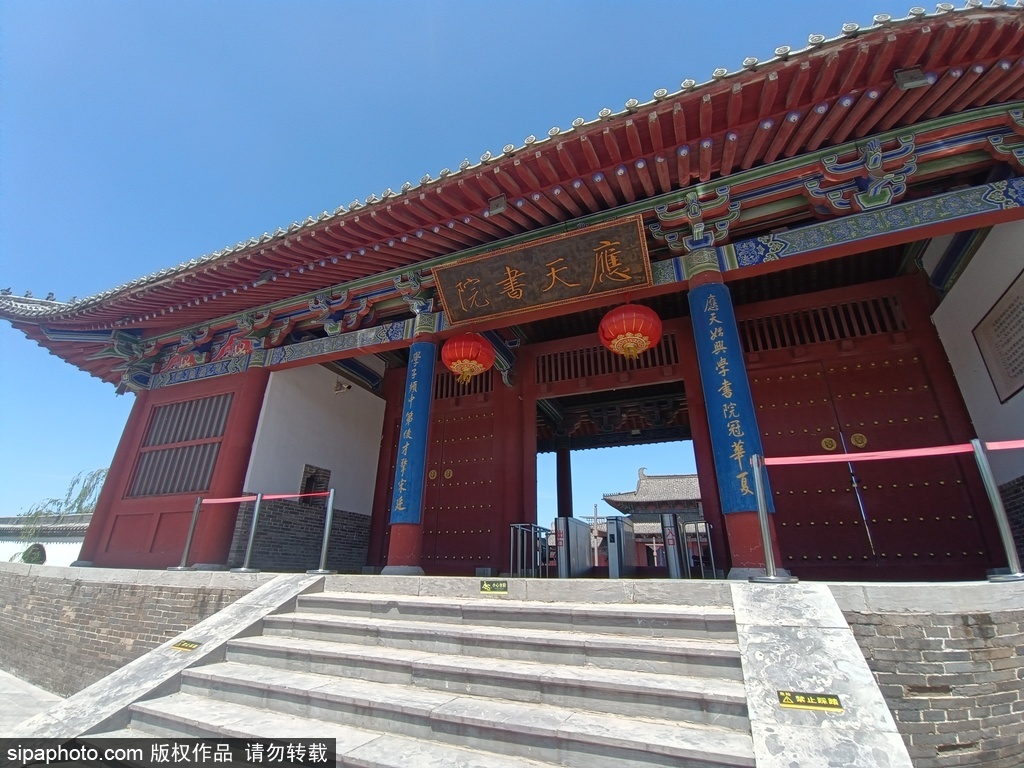
Yingtian Academy
Introduction
Yingtian Academy, also known historically as Yingtianfu Academy or Suiyang Academy, is an esteemed educational institution situated in Shangqiu city of Central China's Henan province. It is celebrated as one of the four great academies of ancient China, renowned for its significant influence during the Northern Song Dynasty (960-1127). Unlike many other academies of its time, which were often located in scenic places such as mountains, Yingtian Academy was established in the vibrant and urban environment of Shangqiu. This strategic location contributed to its prominence and accessibility, allowing it to thrive as a center of scholarly activity. The academy attracted many notable scholars, including Yan Shu and Fan Zhongyan, who contributed to its rising reputation as a leading educational institution.
History
Founding
The origins of Yingtian Academy can be traced back to the early 11th century. It began as a private school established by a local figure named Cao Cheng in 1009 AD. Cao Cheng, a native of Songzhou, donated funds to create this school within the city, laying the groundwork for what would later become Yingtian Academy. This generous act was officially recognized by the government, drawing praise from Emperor Zhenzong. In 1006, Songzhou was elevated to the status of Yingtianfu, and by imperial decree, the academy was named Yingtianfu Academy in 1009. This official endorsement significantly enhanced its reputation, quickly making it one of the four major academies of the early Northern Song Dynasty.
Development
Over the ensuing years, Yingtian Academy continued to develop and gain prominence. Its predecessor, the Nandu School, was founded by Yang Que during the later Jin period of the Five Dynasties (AD 907-960). This historical lineage provided a foundation of scholarly tradition and prestige that the academy built upon. In 1043, during the Qingli era, Emperor Renzong of Song decreed a significant change, renaming Yingtian Academy as the Nanjing National Confucian Temple. This transformation marked its peak as a top academic institution within the Northern Song Dynasty, further solidifying its role in the intellectual and cultural life of the era.
Decline
Despite its initial success and high status, Yingtian Academy faced periods of decline, as did many historical institutions. Changes in political dynamics, shifts in educational priorities, and the challenges of maintaining such a prestigious institution in a changing world likely contributed to its decline. However, the legacy of Yingtian Academy remains influential in the context of Chinese educational history and its contributions to Confucian scholarship.
Architecture
Layout
The architectural layout of Yingtian Academy was designed to foster an environment conducive to learning and scholarly pursuits. While specific details about the layout are sparse, it likely featured a series of halls and courtyards typical of traditional Chinese academies. These spaces would have been used for lectures, discussions, and various academic activities, accommodating both students and esteemed scholars.
Notable Structures
Among the notable structures at Yingtian Academy was the library, established to preserve and reflect on the scholarly contributions of figures such as Fan Zhongyan. In addition, a stele inscription was erected to commemorate Fan Zhongyan's teachings, emphasizing the importance of virtue in education and the broader sequence of learning. These structures not only served practical purposes but also symbolized the academy's commitment to academic rigor and moral development.
Cultural Significance
Influence on Education
Yingtian Academy played a pivotal role in shaping the educational landscape of the Northern Song Dynasty. By prioritizing moral education and intellectual inquiry, it set a standard for other institutions of the time. The emphasis on virtue and the comprehensive approach to learning advocated by scholars like Fan Zhongyan had a lasting impact on the educational philosophy of the era, influencing subsequent generations of scholars and educators.
Contributions to Confucianism
The academy's contributions to Confucianism were significant, particularly through its promotion of Confucian values and teachings. As a center for Confucian scholarship, Yingtian Academy helped to disseminate Confucian ideas, fostering a deeper understanding of these principles among its students and scholars. Its renaming as the Nanjing National Confucian Temple further underscores its role in advancing Confucian thought during a critical period in Chinese history.
Preservation and Legacy
Efforts to preserve the legacy of Yingtian Academy have been undertaken in various forms, aiming to maintain its historical and cultural significance. Restoration projects have sought to protect the remaining structures and artifacts associated with the academy, ensuring that its contributions to Chinese educational history are not forgotten.
In modern times, Yingtian Academy is recognized as a symbol of China's rich educational heritage. It stands as a testament to the enduring value of traditional academies and their role in cultivating intellectual and moral development. The academy's influence is acknowledged in contemporary discussions of educational history, highlighting its importance as a center of learning and cultural exchange during the Northern Song Dynasty.








